



The year 2025 marked the 40th anniversary of Microsoft Windows, from Windows 1.0 through Windows 11. It’s a fun trip down memory lane: floppy discs, Novell NetWare logins, an IBM PCjr keyboard that ran on the same wireless signal as a TV remote. But one detail buried in that nostalgia matters far more to my world than to the average PC user: lifecycle and support for a decade.
That detail is the story I want to tell. Here’s why it matters for anyone building or maintaining IoT and embedded devices. Microsoft understands the embedded IoT space, and they know OEMs want an efficient, reliable, stable, yet feature-rich O/S. Still, more than any feature, it’s about the lifecycle and knowing their OEM device can be made available for a decade.
The 40-Year Version, Fast-Forwarded
A quick recap of the highlights: Windows 1.0 launched in 1985. Windows 95 brought the PC mainstream. XP and Windows 7 are still the two I hear people point to as Microsoft’s best work, with Vista as the well-known miss in between. Windows 8 bet early on touchscreens before the hardware caught up, 8.1 walked part of that back, and Microsoft skipped straight from 8 to 10, famously calling Windows 10 “the last version of Windows” before it racked up 14 build versions and retired on October 14, 2025. That brings us to the current Windows 11, which has been out for five years now, and the 6th build version launches this fall.
It’s a good story. But it’s built for consumer PCs, which get replaced every few years. Embedded and IoT hardware doesn’t work that way, and that’s where the conversation I want to have begins.
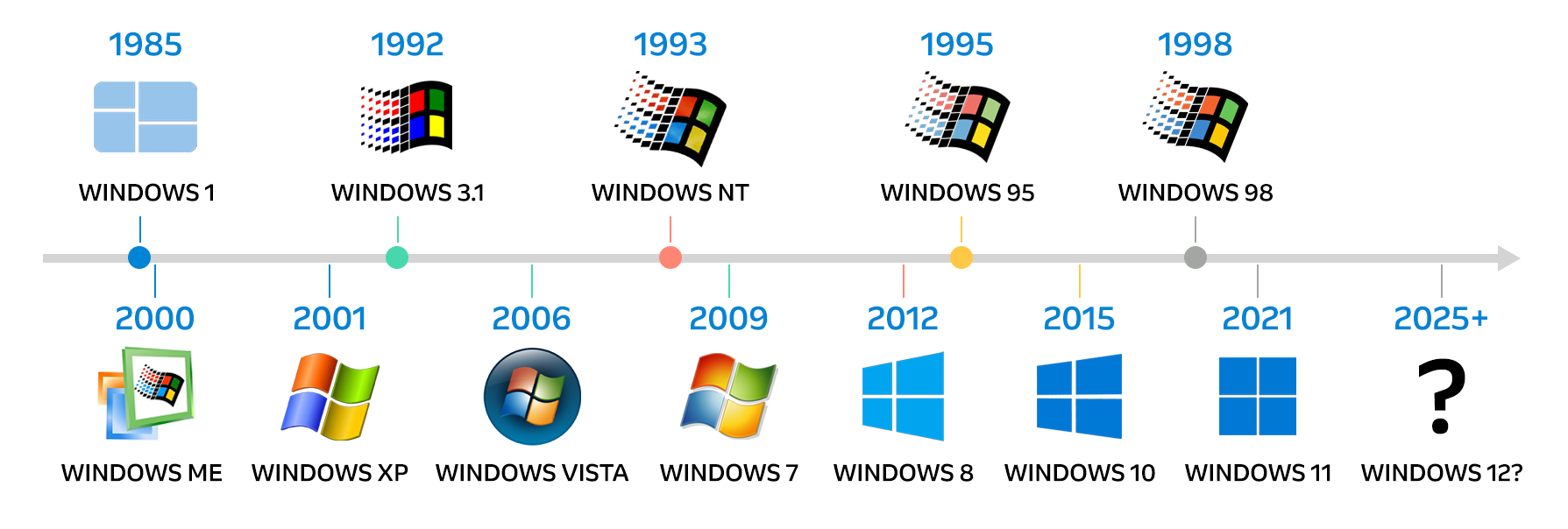
Why Windows 7 had 15 years of very successful life in the Embedded World
For a point-of-sale terminal, a kiosk, industrial equipment, or a medical device, a three-to-five-year refresh cycle isn’t realistic; these platforms are often designed to run for a decade or more without a hardware swap. Microsoft has long addressed this with a separate track for embedded and IoT devices: the Long-Term Servicing Channel (LTSC), alongside legacy LTSB releases. These editions decouple embedded hardware from the rapid, feature-driven update cadence of consumer Windows, which is exactly why I can still help customers source specialized Windows 7 and Windows 10 embedded builds long after their consumer counterparts were retired.
It’s a detail easy to miss in a “40 years of Windows” retrospective, but to me it’s the whole reason a dedicated embedded licensing channel exists in the first place.
The Clock I Tell OEMs to Watch
With Windows 10 now retired for general use, the question I get most from embedded and IoT teams isn’t “will Microsoft release Windows 12?” Instead, the question I hear is “which Windows 10 IoT edition am I running, and when does its support clock actually run out?” Per Microsoft’s current lifecycle documentation, the dates differ considerably by edition:
- Windows 10 IoT Enterprise (General Availability Channel): support already ended October 14, 2025.
- Windows 10 IoT Enterprise 2016 LTSB: support ends October 13, 2026, after which Extended Security Updates are available via Arrow’s ESU options.
- Windows 10 IoT Enterprise LTSC 2019: supported through January 9, 2029.
- Windows 10 IoT Enterprise LTSC 2021: supported through January 13, 2032.
Microsoft’s recommended forward path for new designs is Windows 11 IoT Enterprise LTSC 2024. I still see teams treat “Windows 10 support” as a single date, and that’s one of the more common planning mistakes I encounter; the right answer depends entirely on which edition and build a given fleet is running.
So, Is Windows 12 (or “Windows vNext”) Coming?
I raised a fair question in my video: with Windows 11 on its fourth build and a fifth (25H2) on the horizon, would Microsoft finally ship a numbered Windows 12, or lean into the AI branding trend with something like “Windows AI?” Now that the dust has settled, I can tell you: not yet. Windows 11 25H2 shipped in Fall 2025 as planned, and Microsoft has continued the same approach into 2026 with version 26H2 (being delivered as a lightweight enablement update). Microsoft hasn’t confirmed a Windows 12 name or release date, and current roadmap reporting points to Windows 11 remaining the platform of record through 2026 and likely into 2027.
For IoT and embedded planning, that is good news: it means the LTSC lifecycle dates above are the real planning anchor, not a hypothetical next-gen OS.
Bringing Decades of Expertise to Your IoT Strategy
Forty years in, the throughline hasn’t changed for me: Microsoft keeps building consumer and embedded Windows on different clocks, and getting that distinction right is the difference between a device that’s supportable for a decade and one that quietly falls out of security patching. That’s the exact problem I work through every day with OEMs and device makers here at Arrow’s intelligent solutions business, matching the right Windows IoT edition and licensing model to a product’s real hardware lifecycle, and planning the migration path before an end-of-support date forces the issue.
If your fleet is still running a 2016-era or non-LTSC Windows 10 IoT build, now’s the time to map out where it sits on that timeline. Reach out to the Arrow team and me to talk through your options at windowsiot@arrow.com.
Learn More


