Featured Blogs

Design Once, Deploy Anywhere: The Repeatability Challenge in Distributed AI Infrastructure
October 2026
For edge AI infrastructure, scaling successfully depends on whether a design can be reproduced consistently across systems and regions while maintaining configuration control, quality, and supportability. Arrow's intelligent solutions business enables repeatability through disciplined engineering, integration, supply-chain, and deployment processes.
AI infrastructure is becoming increasingly distributed, with inference workloads landing in factories, hospitals, retail environments, energy sites, and other locations where data is generated and decisions must happen in real time.
That shift creates a challenge that is easy to underestimate, because a working prototype that performs cleanly in a development lab becomes a different system when it has to be deployed across dozens of locations, several countries, and multiple operating environments where component availability changes by region, certifications diverge, firmware and software revisions drift, and logistics get harder. Support requirements grow as the installed base grows.
For OEMs and ISVs building on Dell Technologies infrastructure, the goal is to design a system that can be reproduced consistently wherever the business needs it.
The Prototype is only the First Version of the System
Design teams typically start with performance requirements, selecting the Dell PowerEdge compute, storage, networking, acceleration, and edge platforms that fit the workload, resulting in a working prototype that meets the technical requirements in a controlled environment.
Global deployment then introduces a second set of requirements that was not originally set up to meet:
- Can the same hardware and software configuration be reproduced in every target region without unplanned substitutions or version differences?
- Can firmware, BIOS settings, software images, drivers, and test procedures stay under control as production moves between facilities?
- Can the supply model hold that configuration across the expected lifecycle, even as components reach end of life or regional availability shifts?
- Can each system meet the same acceptance criteria before it reaches the deployment site?
- Can you support the installed base consistently once systems are running across different geographies and service environments?
Engineering Repeatability at Global Scale
A globally scalable system starts with a controlled definition of what must stay identical and what can vary by market. The fixed elements typically include the Dell platform, firmware levels, software image, system configuration, security controls, test procedures, performance thresholds, and validation criteria. Power requirements, certifications, logistics routes, service coverage, and qualified component alternatives can flex by region.
Arrow's CopyXact™ approach captures that definition as a qualified configuration and carries it across Arrow's global integration network. Every facility builds, configures, tests, and prepares systems against the same specification, so each unit matches the approved design wherever it is produced.
For an OEM shipping Dell-based AI infrastructure into North America, Europe, Asia, or the Middle East, that approach avoids the tax of centralizing every build in one geography and absorbing the customs, lead-time, transportation, and service complexity of shipping finished systems everywhere else, because the design holds. The build location moves closer to demand.
Designing for Supply Continuity
Global repeatability also depends on whether the system can remain buildable over time. For OEMs and ISVs, that means accounting for component lifecycle, availability, approved alternatives, forecast requirements, and inventory strategy early enough that supply changes do not force unplanned redesigns or create multiple versions of the same product in the field.
Arrow's supply chain management capabilities help connect those decisions, while Dell Technologies OEM Solutions' extended lifecycle programs support longer-term platform consistency. Together, those capabilities make it easier to manage substitutions, lifecycle transitions, and inventory changes through a controlled process that protects the integrity of the Dell PowerEdge and Dell storage platforms at the core of the solution.
Consistency Becomes a Growth Advantage
For enterprises, repeatability ultimately depends on how quickly the business can scale without adding operational risk. A Dell-based system that can be reproduced across regions with the same configuration, validation standards, and support model gives the organization a more predictable path into new markets and new deployment environments.
That consistency reduces the number of exceptions engineering teams have to manage, limits configuration drift across the installed base, and makes it easier to introduce changes without disrupting the product already in the field. It also gives sales and operations teams greater confidence that they can deliver a solution validated in one market in another without restarting the design and qualification process.
When repeatability is built into the system from the beginning, global expansion becomes faster, more predictable, and easier to support, turning consistency from an operational discipline into a competitive advantage.
Talk to Arrow About Scaling Distributed AI with Confidence
Dell Technologies OEM Solutions provides the AI infrastructure foundation across the datacenter and edge. At the same time, Arrow helps validate, reproduce, deploy, and support those systems at scale through CopyXact, global integration, supply-chain planning, fulfillment, and lifecycle services.
That repeatability can shorten the path from design to deployment across regions while reducing configuration drift, supply risk, and operational complexity.
If you are building distributed AI infrastructure on Dell Technologies, Arrow can help assess the design for repeatability, supply continuity, and deployment readiness. Schedule a working session at arrow.com/ais/dell-technologies-oem-solutions.
Staying Ahead in a Tight Memory and Storage Market
July 2026
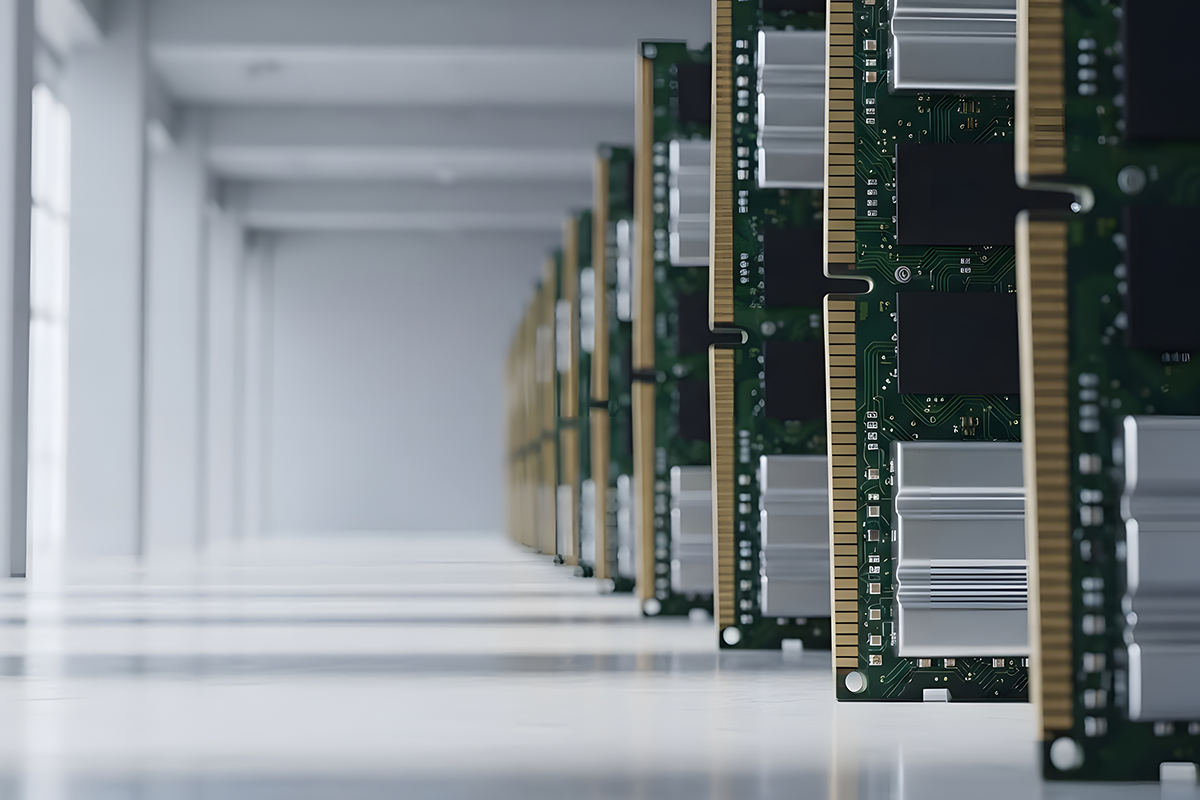
DRAM and NAND supply remains tight, and demand is still building. Arrow helps customers understand what’s changing, where options may be limited, and how to plan.
In our previous update, we outlined how the memory market had shifted from a traditional cycle into a more managed, allocation-driven environment. Since then, those dynamics have continued to develop.
Memory has become even more important to AI infrastructure, with more capacity moving toward higher-value products like HBM and DDR5. That shift can make conventional DRAM, legacy memory, and lower-density storage harder to source.
As AI use grows across more applications, customers may see supply continue to favor newer, higher-performance technologies.
Industry forecasts still point to growth across DRAM and NAND Flash, supported by AI adoption, higher-performance computing requirements, and enterprise storage needs. For customers, the takeaway is plan for supply access, approved alternates, and lifecycle transitions.
Long-term commitments, existing demand, and supplier priorities are shaping what customers can secure and when. As capacity shifts toward AI and newer technologies, some legacy and lower-density products may become harder to support.
That makes lifecycle timing, approved alternates, and technology transitions more important. Customers may need to decide when to move to current revisions, how long legacy products can realistically be supported, and where component flexibility can reduce risk.
What’s the Latest in Memory and Storage by Category
DDR5 DRAM
- Supply remains constrained, with server, DDR5, and AI-related applications continuing to take priority.
- Client and consumer segments may see tighter access as demand remains focused on higher-priority applications.
- Teams that rely on steady DRAM supply should confirm demand signals, approved alternates, and transition plans early.
DDR4 DRAM (Legacy Segment)
- DDR4 supply remains limited, especially for customers supporting industrial, embedded, and legacy platforms.
- Production remains selective, which can make consistent access challenging for long-running programs.
- For some customers, this may be the right time to look at DDR5 migration paths.
NAND Flash
- NAND supply remains closely tied to enterprise and AI-related demand.
- Legacy storage options may become more limited as the market shifts toward higher-capacity solutions.
- As suppliers move toward higher-layer NAND technologies, customers using older configurations should review lifecycle timing and alternative options.
HDD Market
- High-capacity HDDs continue to play an important role in cost-effective storage strategies.
- Demand for higher-capacity drives remains strong, while lower-capacity options may be less available over time.
- Customers with long-term storage requirements should review alternates and transition timing sooner rather than later.
How Arrow Helps Guide Customers Through This Market
As supply stays tight, Arrow works with customers to plan and make practical sourcing decisions. Explore the table below for how Arrow helps guide customers through this market.
| Area of Focus | Description |
| Broadening supplier options | Helping qualify new and underutilized suppliers so customers have more options when components are constrained |
| Sharing market visibility |
Providing insight into constrained parts, supply trends, and configuration choices so teams know what to expect |
| Exploring practical alternatives | Helping customers compare options that can support continuity and keep programs moving |
| Supporting DDR4 continuity and transition | Working with industrial, embedded, and legacy customers on inventory continuity, allocation-based supply, and DDR5 transition planning at a pace that aligns with their business needs |
| Using supplier relationships | Working with platform providers to help customers understand constraints and plan deployments in a changing market |
| Aligning supply with business priorities | Helping customers think through critical components, timing, and sourcing choices so they can avoid surprises and stay on track |
| Managing product lifecycle transitions | Enabling customers to plan for technology revisions, supplier roadmap changes, and end-of-life (EOL) considerations so they can qualify alternatives before options become limited |
Memory and storage conditions can change quickly. Arrow helps customers make sense of those changes, compare realistic options, and give teams more room to adjust when supply or technology direction shifts.
If your team is weighing supply options, planning a transition, or managing product lifecycle changes, Arrow can help you sort through the choices and decide what to do next.

Building Infrastructure Confidence in an Uncertain Supply Chain Climate
June 2026
The next several years will require more disciplined infrastructure and supply chain planning because memory, storage, and other component markets continue to evolve. For organizations building and scaling technology solutions, choosing the right platform is only part of the decision. Teams also need confidence that systems can be delivered consistently, configured predictably, and supported as market conditions shift.
With component availability, pricing, and deployment timelines in a continuous state of change, companies developing hardware-based solutions, software-defined platforms, edge appliances, embedded systems, and validated infrastructure offerings are asking practical questions earlier in the planning process:
- Can the systems be delivered when and where needed?
- Can configurations remain consistent across regions?
- Can suppliers respond to changing demand?
- Can costs be managed as component markets fluctuate?
- Can organizations move from prototype to production without unnecessary delay?
These questions are becoming a larger part of how organizations evaluate infrastructure partners.
The Business Impact of Supply Chain Uncertainty
When infrastructure availability changes unexpectedly, the impact can extend across product planning, delivery commitments, regional rollouts, margins, and lifecycle support. Teams may need to adjust validated configurations, revisit timelines, or manage cost changes that were not part of the original plan.
The added complexity is why supplier selection has become a more strategic infrastructure decision. Organizations need technology partners with the scale, visibility, and operational discipline to support planning, maintain consistency, and help execution stay on track as conditions change.
Supply Chain Assurance Starts with Proactive Planning
As organizations look for greater visibility and consistency in their infrastructure decisions, Lenovo offers a strong example of supply chain scale and discipline. Lenovo is ranked number eight in the Gartner Supply Chain Top 25 for 2025, demonstrating its ability to use a global, flexible, and resilient supply chain to navigate macroeconomic uncertainty.
That recognition is supported by practical planning measures, including working with component suppliers to forecast demand over the next 18 months and, where possible, making bulk purchases to support cost stability and supply continuity.
Lenovo’s supply chain strength is also reinforced by its global manufacturing footprint and continued expansion across key regions. Manufacturing growth in the Middle East, along with established operations across Latin America, North America, EMEA, and APAC, strengthens Lenovo’s ability to support customers across geographies and respond to changing demand.
The company is also aligning its supply chain strategy with high-growth technology areas, including AI and infrastructure solutions. This focus reinforces the importance of supplier coordination, planning visibility, and execution discipline as organizations prepare for changing infrastructure requirements.
Infrastructure Options from Edge to Enterprise
Lenovo’s portfolio spans compute, storage, edge, and end-user platforms, giving organizations a flexible foundation for different solution models and deployment environments.
[caption id="attachment_13702" align="alignnone" width="600"]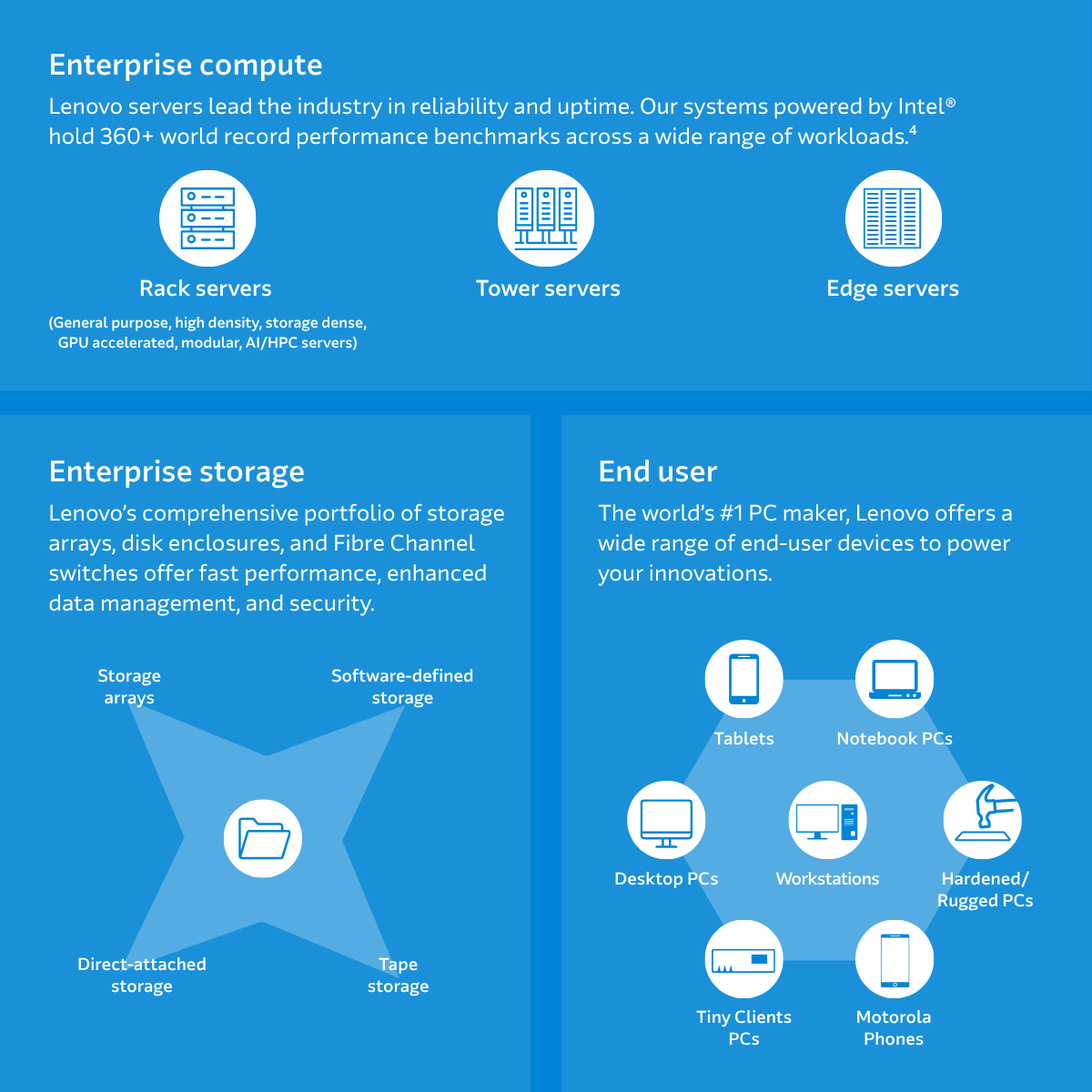 Image: Lenovo OEM Portfolio[/caption]
Whether building infrastructure appliances, edge solutions, AI-enabled platforms, retail systems, healthcare devices, industrial workstations, or validated software-defined solutions, organizations can use Lenovo platforms to align infrastructure choices with workload, configuration, and lifecycle requirements.
How Arrow Electronics Helps Turn Planning into Execution
Supply chain considerations are expected to remain a factor in infrastructure planning, but organizations can take steps to improve visibility, reduce complexity, and prepare for changing conditions.
Arrow helps customers move from strategy to execution by connecting Lenovo’s supply chain strength and infrastructure portfolio with Arrow’s engineering, integration, supply chain, and deployment expertise. This support can help technology solution providers evaluate platform options, understand timing considerations, and align deployment plans with availability, configuration, and business requirements.
Through integration services, testing capabilities, global support, and supplier relationships, Arrow helps organizations source, configure, manufacture, and deploy infrastructure solutions more efficiently.
Together, Lenovo and Arrow help enable organizations with a more resilient route to plan, integrate, and scale solutions across enterprise, edge, and end-user environments.
Connect with Arrow to learn how Lenovo OEM Solutions and Arrow integration services can help you integrate and scale deployment-ready solutions from edge to enterprise.
Explore how Arrow helps support leading OEMs with: