


The next several years will require more disciplined infrastructure and supply chain planning because memory, storage, and other component markets continue to evolve. For organizations building and scaling technology solutions, choosing the right platform is only part of the decision. Teams also need confidence that systems can be delivered consistently, configured predictably, and supported as market conditions shift.
With component availability, pricing, and deployment timelines in a continuous state of change, companies developing hardware-based solutions, software-defined platforms, edge appliances, embedded systems, and validated infrastructure offerings are asking practical questions earlier in the planning process:
- Can the systems be delivered when and where needed?
- Can configurations remain consistent across regions?
- Can suppliers respond to changing demand?
- Can costs be managed as component markets fluctuate?
- Can organizations move from prototype to production without unnecessary delay?
These questions are becoming a larger part of how organizations evaluate infrastructure partners.
The Business Impact of Supply Chain Uncertainty
When infrastructure availability changes unexpectedly, the impact can extend across product planning, delivery commitments, regional rollouts, margins, and lifecycle support. Teams may need to adjust validated configurations, revisit timelines, or manage cost changes that were not part of the original plan.
The added complexity is why supplier selection has become a more strategic infrastructure decision. Organizations need technology partners with the scale, visibility, and operational discipline to support planning, maintain consistency, and help execution stay on track as conditions change.
Supply Chain Assurance Starts with Proactive Planning
As organizations look for greater visibility and consistency in their infrastructure decisions, Lenovo offers a strong example of supply chain scale and discipline. Lenovo is ranked number eight in the Gartner Supply Chain Top 25 for 2025, demonstrating its ability to use a global, flexible, and resilient supply chain to navigate macroeconomic uncertainty.
That recognition is supported by practical planning measures, including working with component suppliers to forecast demand over the next 18 months and, where possible, making bulk purchases to support cost stability and supply continuity.
Lenovo’s supply chain strength is also reinforced by its global manufacturing footprint and continued expansion across key regions. Manufacturing growth in the Middle East, along with established operations across Latin America, North America, EMEA, and APAC, strengthens Lenovo’s ability to support customers across geographies and respond to changing demand.
The company is also aligning its supply chain strategy with high-growth technology areas, including AI and infrastructure solutions. This focus reinforces the importance of supplier coordination, planning visibility, and execution discipline as organizations prepare for changing infrastructure requirements.
Infrastructure Options from Edge to Enterprise
Lenovo’s portfolio spans compute, storage, edge, and end-user platforms, giving organizations a flexible foundation for different solution models and deployment environments.
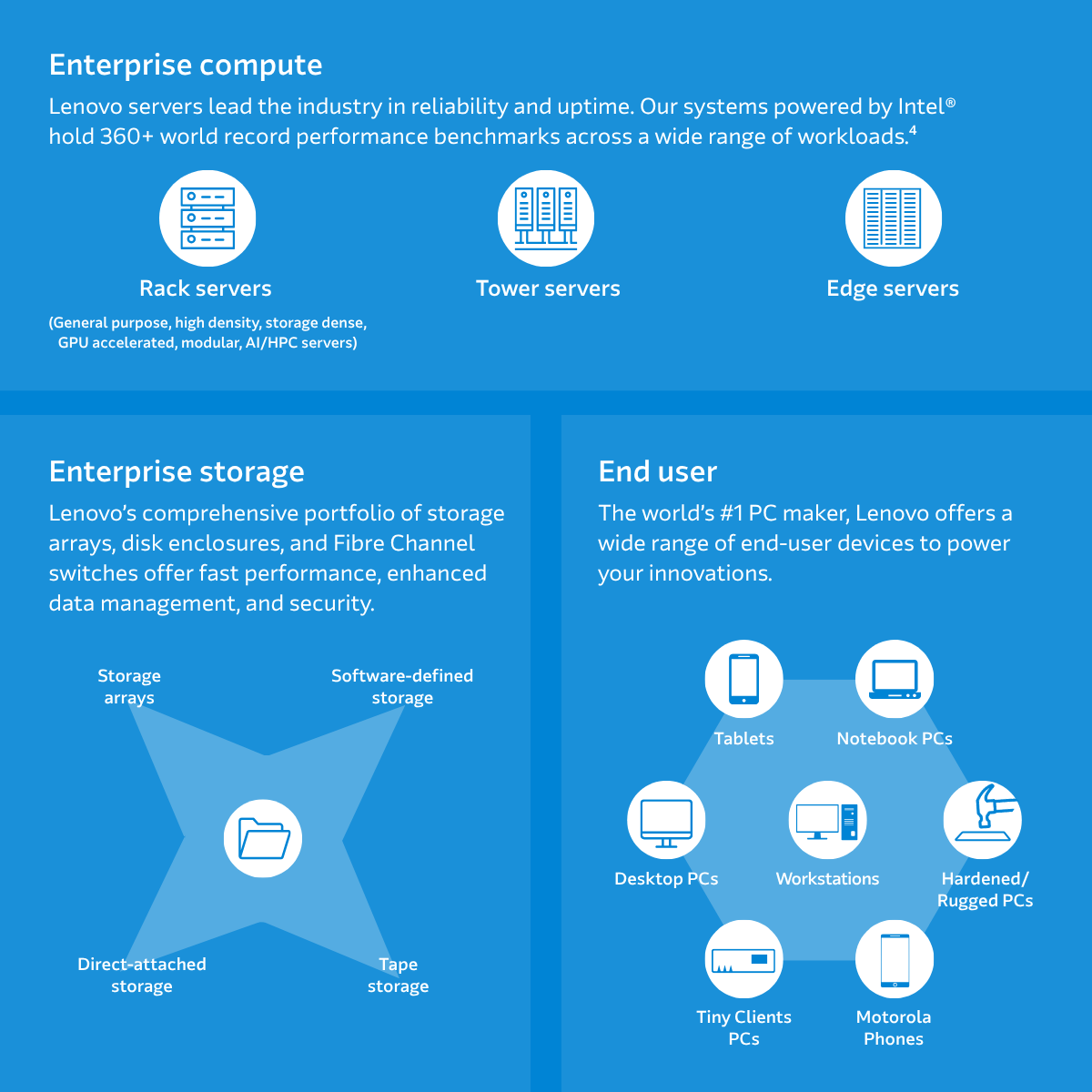
Whether building infrastructure appliances, edge solutions, AI-enabled platforms, retail systems, healthcare devices, industrial workstations, or validated software-defined solutions, organizations can use Lenovo platforms to align infrastructure choices with workload, configuration, and lifecycle requirements.
How Arrow Electronics Helps Turn Planning into Execution
Supply chain considerations are expected to remain a factor in infrastructure planning, but organizations can take steps to improve visibility, reduce complexity, and prepare for changing conditions.
Arrow helps customers move from strategy to execution by connecting Lenovo’s supply chain strength and infrastructure portfolio with Arrow’s engineering, integration, supply chain, and deployment expertise. This support can help technology solution providers evaluate platform options, understand timing considerations, and align deployment plans with availability, configuration, and business requirements.
Through integration services, testing capabilities, global support, and supplier relationships, Arrow helps organizations source, configure, manufacture, and deploy infrastructure solutions more efficiently.
Together, Lenovo and Arrow help enable organizations with a more resilient route to plan, integrate, and scale solutions across enterprise, edge, and end-user environments.
Connect with Arrow to learn how Lenovo OEM Solutions and Arrow integration services can help you integrate and scale deployment-ready solutions from edge to enterprise.
Explore how Arrow helps support leading OEMs with: