

N50 Zona Digital supported by Arrow
Expanding Opportunities
Arrow is supporting N50’s largest digital lab in Guadalajara, Mexico as a model for the planned global expansion. With its large concentration of tech firms, Guadalajara – located in the state of Jalisco – has earned a reputation as Mexico’s “Silicon Valley.” According to government data, since 2019 Jalisco has attracted about $2.7 billion in investments from Arrow and other tech companies, creating more than 40,000 jobs.
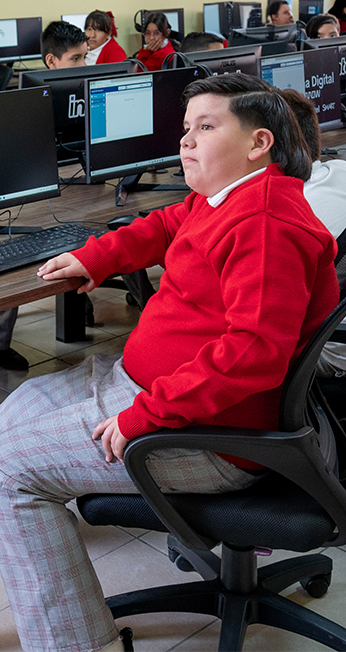
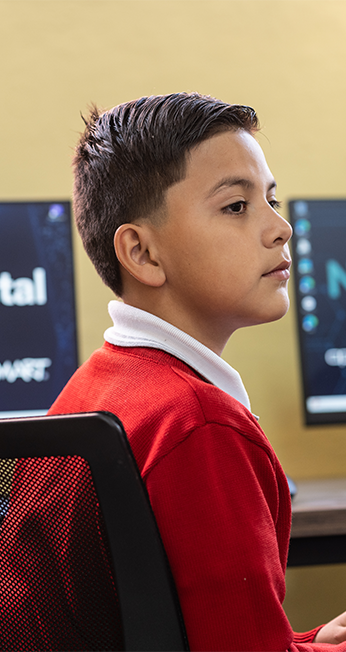
For Guadalajara students, the path to securing those jobs could start in the newly opened digital lab. The model lab is located at an elementary school in a west Guadalajara neighborhood a few miles from the offices of Arrow and other tech companies. The model lab is equipped with 40 workstations, interactive SMART boards and – perhaps most importantly – a stable Internet connection.
Every school day, 160 fifth and sixth graders will take teacher-led classes in the lab. The students will learn how to use a computer as well as access new and previously unavailable curriculum. While the workstations are linked, the system has safeguards so students learn and take tests separately.
“What we hope for these students is to gain familiarity with the technology and bridge these digital gaps, so they can be the engineers of the future.”
– Maria Alejandra Cuen Loredo, a Guadalajara-based business operations lead for Intel, an N50 partner.
The model digital lab is part of N50’s EdTech Equity initiative. This effort is broadly committed to expanding access to technology and connectivity for students in under-resourced communities. N50 estimates that nearly half of the world’s schools are unable to provide online services and 1.3 billion students still can’t access the Internet at home.
“This is a massive problem, and it isn’t just about the haves and the have nots. It’s really about those that are accelerating and are going to be able to get the jobs of the future and create the jobs of the future, and those that aren’t.”
– Daniel Gutwein, N50 Executive Director
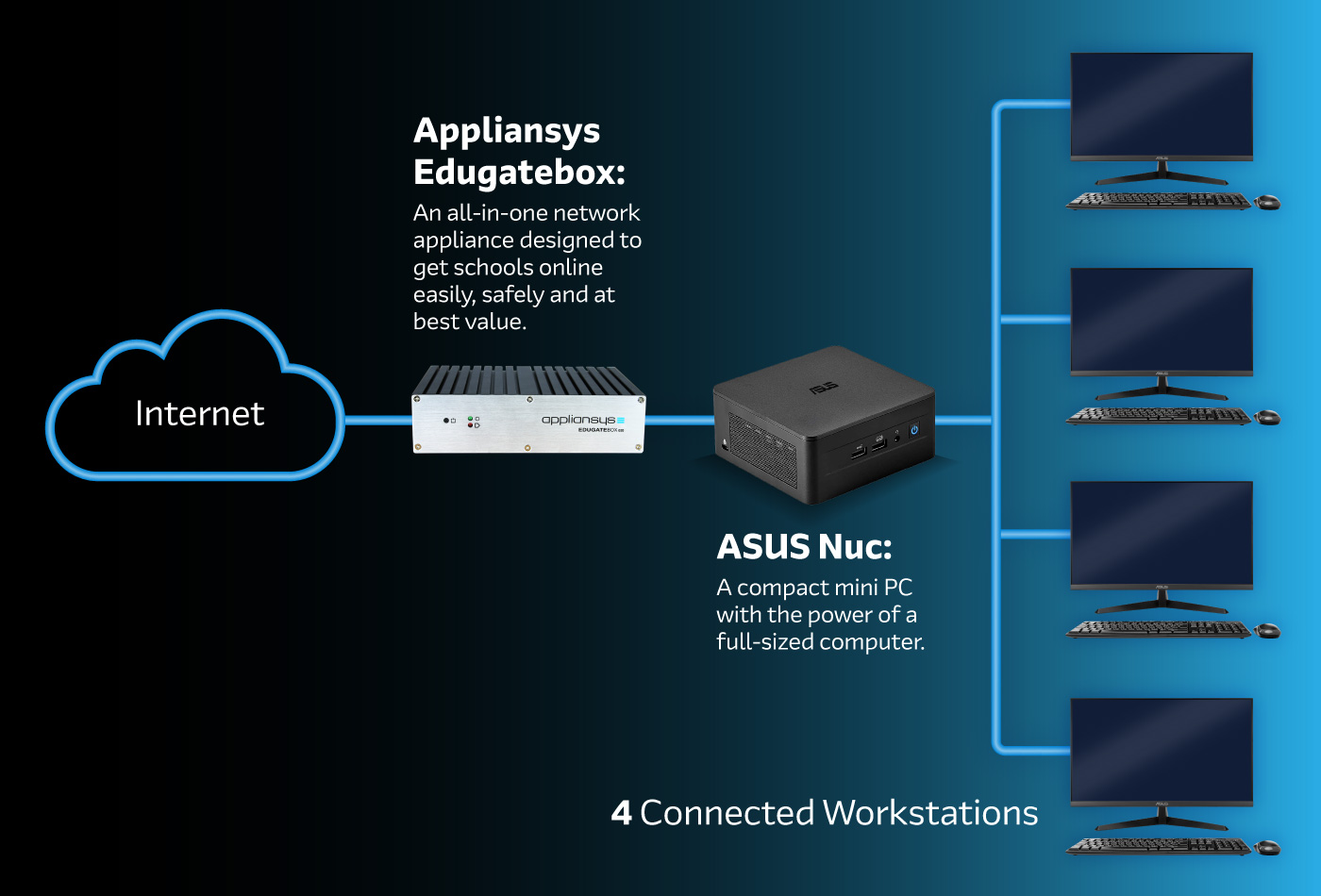
N50 – whose name refers to the next 50% of the global population that are not yet participating in the digital world – helps schools bridge the divide by deploying low-cost, scalable and sustainable technology solutions with support from companies like Arrow, Intel, ApplianSys, ASUS and SMART Technologies. The N50 Connectivity Kit is the nonprofit’s key solution, providing everything a school would need for a lab like the one in Guadalajara. To maximize resources, the kit includes software that enables N50 and its partners to take a single, small form factor, low-cost computing device, and configure it for multiple users. The Guadalajara lab, for example, has 40 workstations running off 10 computers.
These devices are managed and serviced through the ApplianSys EDUGATEBOX, which can remotely update and service the lab. The EDUGATEBOX also acts as a network appliance, helping to secure the Internet and stabilize spotty service by auto-caching Internet pages and online content. That versatility makes it easier for teachers and students to watch and share videos, for example, without worrying about bandwidth issues.
The Connectivity Kit can be customized to include SMART boards for interactive learning, digital libraries and other online programming – giving teachers the ability to experiment with new teaching methods.
“It’s not just about (students) learning the skills, which is absolutely important, but it also becomes about how do we improve the quality of the education that they’re receiving over time.”
– Paul Zyskowski, a solutions architect at Intel.
Intel, ApplianSys, SMART and ASUS contribute hardware/software for the Connectivity Kit. Arrow integrates those components according to N50’s guidelines and handles shipping and delivery to the end destination.
“The partners that we’ve brought in to help build this (kit) have made it a simple environment for people to manage.”
– Scott Gostisha, solutions engineer with N50.
“At Arrow, we recognize the pivotal role we can play in benefiting the communities where we live and work. This includes taking positive action that enables students to pursue STEM education. With this project, we aim to advance tech-forward innovations that enhance the lives of students and broaden STEM education opportunities.”
– Gretchen Zech, Arrow senior vice president and chief governance, sustainability and human resources officer.
In Guadalajara, volunteers from Intel and Arrow will help support the lab and provide mentorship to students, contributing to the lab’s long-term stability.
With its low-cost and potential for scalability, the N50 Connectivity Kits could be a real game changer for schools in developing areas of the world. N50 hopes to deploy hundreds of Connectivity Kits in Africa and the Americas over the next three years. Mexico alone has plans to build thousands of high schools, and N50 wants to contribute labs to those schools.
Arrow is working with the N50 Project to deploy a second digital lab in Mexico City in February.
“Let’s go do it. What happens in 10 years in those high schools? Who’s going to be leading and creating companies and creating ideas and driving entrepreneurship? Probably some of those students.”
– Daniel Gutwein, N50 Executive Director

How it works

Empowering Future Generations
Today’s students will enter a workforce where digital skills are a requirement for the vast majority of jobs – whether they aspire to be a software developer, construction worker or even a race car driver.
It is the universal application of computer skills – and how quickly they change – that prompted Arrow McLaren IndyCar driver Pato O’Ward to help open the model digital lab in Guadalajara. He started using a computer a decade ago as a student.
“It’s something I still use to this day and even more every single day,” said about the digital knowledge he gained in school.
Born in Mexico and raised in Texas, O’Ward understands that not all students in his native country have the same opportunities to use technology. So, he was excited to help Arrow and nonprofit the N50 Project launch their first computer lab at a primary school in Guadalajara, where technology tools are often limited.
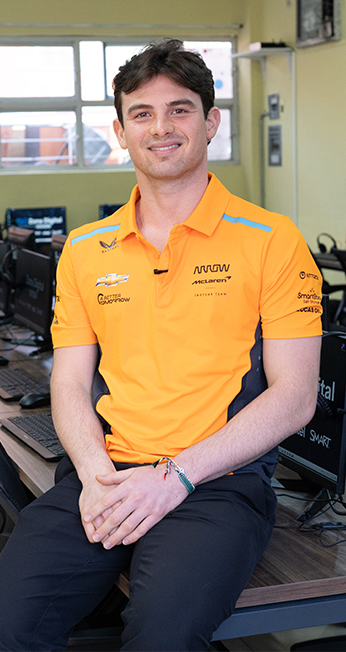
“These students didn’t have access to computers, so this is going to be something new to them. And I would say the sky’s the limit really with technology,” said O’Ward.
The lab will not only equip the students with crucial digital skills but will also enhance the speed at which they learn.
“As soon as the kids learn how to use the computers, something that would take them a couple days, could be cut down to a few hours or even less because (information) will be available to them at the touch of their fingertips,” O’Ward noted.
Technology plays a key role in O’Ward’s high-profile job. Drivers depend on technology to enable vehicle enhancements and to generate crucial data to improve performance.
By having access to technology, O’Ward hopes the students in Guadalajara will have the ability to research different career options and gain a better understanding about the way technology is used in a variety of occupations.
“Not only is it good for learning of maybe a path that you want to take, but it might also open doors to something else,” said O’Ward.