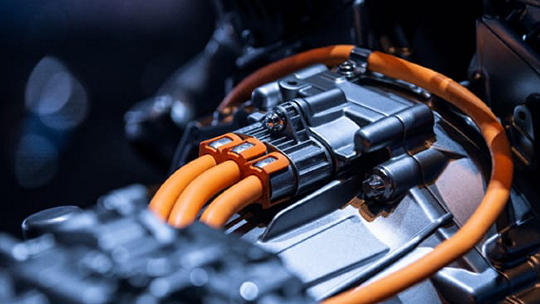
How Connectors Address the Five Core Advantages of Next-Generation HVAC Systems, from Miniaturization to Intelligent Integration

HVAC systems are evolving to support higher energy efficiency, intelligent controls and more sustainable refrigerants. These developments place new demands on connector systems, including greater power density, smaller footprints, environmental protection and reliable transmission of power and data. This article examines key HVAC connection requirements and Molex solutions designed to address them.
Core requirements of HVAC applications for connectors
1. Miniaturization and Power Density
As HVAC systems face increasing demands for high energy efficiency and intelligence, modern HVAC design is also under multiple pressures. These directly translate into specific requirements for connectors, such as the pursuit of high-power density and compact design. Because space inside HVAC units is becoming increasingly tight, especially in equipment such as heat pumps, connectors must carry higher currents within an extremely small package to maximize the use of valuable circuit board space while reducing power loss and heat generation.
2. Reliability in Demanding Environments
In addition, HVAC systems also need to meet high reliability requirements in harsh environments. HVAC equipment often needs to operate outdoors or in industrial environments for decades. Connectors must have IP67/IP68-rated dust and water protection to resist moisture, foam, and debris intrusion. At the same time, they must withstand continuous vibration, thermal cycling, and extreme temperatures (usually covering a range of -40 to +125°C) to prevent terminal back-out or accidental disconnection.
3. Sealing and Environmental Protection
As global regulations tighten (such as EPA, EU Eco design directive, and ASHRAE), connectors also need to meet strict safety and compliance requirements, such as UL certification and RoHS/REACH directives, and have flame retardancy (such as passing the Glow Wire test) and low-smoke zero-halogen characteristics. In particular, for next-generation systems using A2L slightly flammable refrigerants, it is crucial to prevent connectors from becoming a potential ignition source.
4. Assembly Efficiency and Modularity
To simplify assembly, minimize mating errors, and support rapid on-site repair, connector systems are trending toward modular design and improved maintainability. Features such as terminal position assurance (TPA), connector position assurance (CPA), positive-lock mechanisms, and color/mechanical keying can effectively reduce assembly errors and improve serviceability.
5. Intelligent Integration and Signal Integrity
To support predictive maintenance, remote diagnostics, energy optimization, and to meet the needs of intelligent connectivity and signal integrity, HVAC systems integrate a large number of sensors and controllers. This requires connectors to provide high-speed, low-latency data transmission and maintain signal integrity in electrically noisy environments. Shielded Ethernet connectors (such as RJ45) have therefore become critical.

Nano-Fit Connectors

Mini-Fit Connectors

Micro-Fit Connectors
The five core product advantages of Molex connectors
In response to HVAC application requirements, the advantages of Molex connector products are not single-dimensional, but are built around the five core pillars of miniaturization, high reliability, sealing, modularity, and intelligent integration. This is a direct response to the engineering challenges in the HVAC industry's transition toward high energy efficiency and intelligence.
For example, in pursuing high power density and miniaturization to enhance performance in extreme spaces, because space inside HVAC systems is increasingly compact, the Molex advantage lies in reducing package size without sacrificing current-carrying capacity. Compact product lines include Nano-Fit Connectors, Mini-Fit Sigma Connectors, and Squba Connectors.
In addition, to withstand conditions involving moisture, dust, vibration, and extreme temperatures, the connectors need to support durability and sealing in harsh environments to ensure continuous operation. The Molex advantage is reflected in the superposition of multiple protection mechanisms, such as IP68-rated sealing, vibration resistance and terminal back-out prevention, as well as high temperature resistance and flame retardancy capabilities.
Another key requirement for connectors is error-resistant assembly and maintainability to improve efficiency and reduce total cost. Molex connectors help reduce human error and simplify on-site service through human-centered design, such as providing color coding and mechanical keying, positive locks and thumb latches, and modular design.
On the other hand, connectors also need to support IoT and intelligent integration connectivity. To support predictive maintenance and remote control, Molex solutions such as CP Connectors and shielded Ethernet connectors (such as RJ45 products) help ensure reliable data transmission channels.
The Molex advantage in the HVAC field is essentially transforming connectors from "passive components" into "design-enabling tools." Miniaturization addresses space constraints; sealing and TPA address environmental reliability; color coding and modularization addresses assembly and customization efficiency; and IoT readiness addresses future connectivity requirements. Together, these advantages help engineers design next-generation HVAC systems that are smarter, more energy-efficient, and adapted to harsh environments while meeting stringent regulations (such as Glow Wire and RoHS).

Molex connectors solve the core contradictions of heat pumps
For heat pumps, a key device in the HVAC field, the product advantages of Molex connectors are highly focused: within an extremely limited space, these solutions simultaneously solve the three core contradictions of high-voltage safety, extreme-temperature reliability, and installation and maintenance convenience.
Heat pump system design faces unique challenges, such as managing high-voltage power, a large number of sensors and actuators within a compact unit, ensuring long-term stable operation in severe cold and extreme heat, and simplifying installation and maintenance. Molex solutions are built around these pain points to create differentiated advantages.
When designing high-voltage power connections, it is necessary to pursue a balance between safety and ease of use. The compressor, electric auxiliary heating, and other components of a heat pump need to handle high voltage and high current. Molex offers safe, low-insertion-force high-voltage connections designed for installation without special tools, while ensuring they never loosen in vibrating environments. Molex provides barrier terminal blocks and Quixon Quick-Disconnect Terminals. Molex high-voltage connectors generally feature low insertion force and locking mechanisms. Low insertion force allows technicians to complete assembly easily and avoids terminal damage caused by excessive force; the lock ensures that the connection will not accidentally disconnect in the continuous vibration environment of a heat pump. Some connectors also support potting-capable designs, which can further enhance moisture resistance and insulation performance.
In supporting sensor, valve, and switch connections, it is necessary to pursue miniaturization and vibration resistance. The interior of a heat pump is densely packed with temperature and pressure sensors as well as electronic expansion valves, and space is extremely limited with frequent vibration. Molex solutions achieve reliable connections at extremely small pitches and simplify production processes. Molex OneBlade and Pico-Clasp miniaturized connectors offer friction-lock or positive-lock options, ensuring stable connections in high-vibration environments and avoiding signal interruption that could cause heat pump control failure.
For main power and control board connections, high density and robustness are required. To optimize circuit board space within the limited housing of a heat pump, engineers need connectors with a smaller PCB footprint but without sacrificing robustness. Molex provides a complete product series from signal to main power, including products such as Micro-One, Micro-LockPlus, Mini-Fit series, KK Plus and CP-6.5 connectors to meet these needs.
In addition, to meet sensor reliability requirements under extreme temperatures, heat pumps need to operate accurately in severe-cold (outdoor units) and high-temperature (near the compressor) environments. The advantage of Molex sensor connectors lies in consistent performance across a wide temperature range; for instance, Mini-Lock and Micro-One Connectors have a wide operating temperature range covering -40 to +105°C, and the products comply with international safety standards such as V-0/Glow Wire, making them less likely to ignite under thermal stress and providing basic safety assurance for heat pump systems.

Molex Mini-Fit connectors
Molex core goals in intelligent HVAC/heat pumps and environmental sensing and control
For HVAC systems, Molex featured products in the fields of intelligent HVAC/heat pumps and environmental sensing and control share a consistent core goal: within compact spaces, through high current density and reliable locking and sealing mechanisms, simultaneously improve energy efficiency and ensure long-term durability.
The focus of intelligent HVAC and heat pump applications is the power and connection core. Connectors in this field need to handle high-power loads while addressing the challenges of vibration, high temperature, and compact layout. In response to these requirements, the advantage of Molex Micro-Fit+ Connectors is the combination of high current and compact design. The design provides a rated current of up to 13.5A at a 3.00mm pitch; its fully isolated contact design prevents arcing; and it supports reflow soldering (using surface-mount technology, or SMT) to optimize layouts, helping to reduce power loss and heat loss. Compared with previous-generation products, Micro-Fit+ insertion and withdrawal force is reduced by 40%, reducing operator fatigue. The enhanced TPA design effectively prevents terminal back-out, ensuring connection stability in vibrating environments.
As an industry standard for high current and high density, the Mini-Fit series (especially the Mini-Fit Sigma variant) provides extremely high reliability and flexibility for HVAC. The Mini-Fit Sigma Connector provides up to 13.0A current-carrying capacity at a 4.20mm pitch. Its low insertion- and withdrawal-force terminals improve assembly ergonomics and help increase production line efficiency. The TPA function provides secondary locking to prevent terminals from backing out due to vibration or thermal cycling. The sealed cover of the Mini-Fit Sigma design provides IP51-rated protection, effectively resisting condensation and debris intrusion, and some versions support operating temperatures up to +125°C.
The CP Connector series is designed for complex systems requiring error-resistant design and modular expansion, and is especially suitable for intelligent HVAC integration. Through color coding and mechanical keying, this connector fundamentally eliminates the risk of mis-mating in multi-connector systems and reduces on-site failures caused by incorrect assembly. The inertia lock provides clear tactile/audible feedback, ensuring the connection is fully seated. Models such as CP-6.5 support operating temperatures up to +120°C and currents of 12.5A, and have Glow Wire-capability.
In environmental sensing and control applications, engineers need to pursue miniaturization and signal integrity. Connectors in this field are responsible for transmitting sensor signals and control commands, facing severe tests of narrow space, continuous vibration, and temperature fluctuations.
Micro-Lock Plus Connectors are designed for high-density control board and sensor connections, ensuring reliable connections in extremely small spaces. Signal integrity is enhanced through dual-contact terminals featuring either tin or gold plating. The wide lock inspection design and pressure locking provide strong retention force, preventing accidental disconnection in continuous vibration environments such as compressors and fans, and TPA helps prevent terminal back-out. The compact 1.25mm pitch allows higher circuit board layout density and supports the integration of more sensors and control functions. The error-proof mating design reduces assembly errors, helping to lower warranty risk and system downtime.
Pico-Clasp Connectors focus on miniature signal transmission, meeting dense wiring needs. The extremely small 1.00mm pitch is designed specifically for sensor applications with extremely limited space, supports high-density signal routing, and offers a positive-lock option, significantly reducing the risk of terminal back-out and ensuring long-lasting and stable signal transmission.
The common goal of these Molex products is to free up space through miniaturization and high-density design; use TPA, locks, and sealing mechanisms to ensure connections do not fail under extreme conditions; and reduce system-level failures through error-resistant assembly features, ultimately achieving more efficient and more reliable power transmission and signal control within limited physical space.
Conclusion
The HVAC industry is at a crucial crossroads of transformation. Tightening energy efficiency regulations, the introduction of A2L environmentally friendly refrigerants, the integration of IoT intelligent technologies, and consumer expectations for higher performance and sustainability are jointly reshaping the design logic of HVAC systems. In this transformation, although connectors are only one link in the system, they play a key role as "design-enabling tools." Molex solutions clearly respond to this era's needs with product advantages that are not a breakthrough in a single technology, but a systematic capability built around the five pillars of miniaturization, high reliability, sealing, modularity, and intelligent integration.
For HVAC design engineers, choosing the right connector is no longer a passive component procurement decision, but a strategic choice related to system performance, compliance, and long-term competitiveness. The Molex product portfolio provides an answer to this choice that is both forward-looking and practical, paving the way for tomorrow's intelligent, efficient, and sustainable HVAC systems while meeting today's stringent regulations.
Article tags