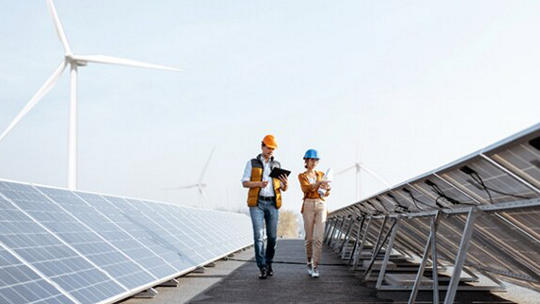
Renewable energy provides sustainable green power for AI data centers
When we scroll through our phones, use navigation, search for information online, or use voice assistants, image recognition functions, and even ChatGPT for AI chatting, translation, or creation, behind all of this, "data centers" are quietly at work. These data centers operate tens of thousands of servers, functioning like the brain of the digital world, running 24 hours a day, processing countless pieces of information and computational tasks. All of these processes are inseparable from "electricity."
But did you know? With the rapid development of artificial intelligence, AI models require massive computational resources, most of which are concentrated in data centers. The operation of these data centers not only demands enormous amounts of electricity to power the servers, but also requires cooling systems to maintain stable temperatures in the server rooms. As a result, the electricity consumption of data centers has surged dramatically. It is estimated that global data centers now account for 2-3% of total electricity consumption, and this number continues to rise. This leads to an unavoidable issue: while we want AI to keep advancing, how can we reduce the burden that data centers place on the Earth's resources?
To alleviate the impact of data centers on Earth's resources, Arrow Electronics and its partners have been dedicated to developing renewable energy-related solutions. At the upcoming PCIM Asia 2025 exhibition, you will see the efforts made by Arrow Electronics and its partners.
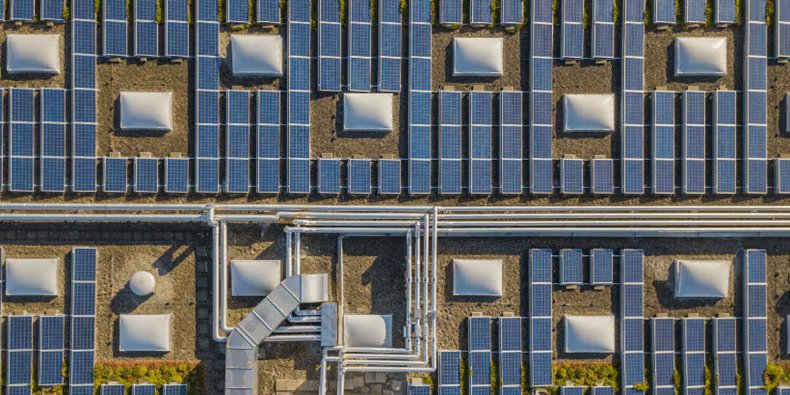
Renewable energy for AI data centers: solar power and battery storage
To ensure that the development of AI does not become a burden on the planet, more and more tech companies and data centers are adopting renewable energy sources such as solar, wind, and hydro power. These naturally derived energies have minimal environmental impact, reduce carbon emissions, and make data centers more sustainable.
When you choose to use a more sustainable platform - such as requesting cloud service apps to use green energy or supporting companies that adopt renewable energy - you are taking action to influence the entire industry toward greater sustainability. As AI becomes increasingly integrated into our daily lives, the role of data centers will only grow more important.
Solar power is a clean, inexhaustible energy source. By installing solar panels on data center rooftops or nearby open spaces, electricity can be directly supplied to servers during the day, reducing reliance on traditional power grids. To enable solar energy to function at night as well, battery storage systems play a critical role. Simply put, the excess solar energy generated during the day is stored in high-capacity batteries, and then released at night or on cloudy days to provide power - allowing AI data centers to operate steadily 24 hours a day.
Sunlight injects green energy into AI, and battery storage keeps solar power shining. This transformation helps reduce carbon emissions, making AI development not an environmental burden but a part of environmental protection, while also saving energy costs. As AI further integrates into sectors such as healthcare, education, and transportation, data centers will become the core engines of intelligent society. Powering intelligence with the sun and storing the future with batteries is not only just technological innovation, but also a gentle promise to the Earth.
Renewable energy solutions make intelligent computing more sustainable
Arrow Electronics and its partners have long been committed to making intelligent computing more sustainable, fostering a harmonious relationship between technology and the planet, and have launched a wide range of renewable energy solutions. Below, we will introduce the solutions developed by Arrow Electronics and its partners according to different application categories such as energy conversion, battery management systems, system interfaces, and control.

Energy Conversion
In solar and battery energy storage systems, energy conversion acts like a “power translator,” converting different forms of electricity into usable power for devices. Solar panels generate DC (direct current), but most data center equipment requires AC (alternating current), thus requiring inverters to convert DC to AC. Battery storage systems also store power in DC form, so voltage and current need to be regulated during discharge to ensure stable and safe power supply. Through high-efficiency conversion equipment, the power from solar and battery systems can be stably delivered to AI data centers, enhancing energy efficiency and ensuring uninterrupted operation.
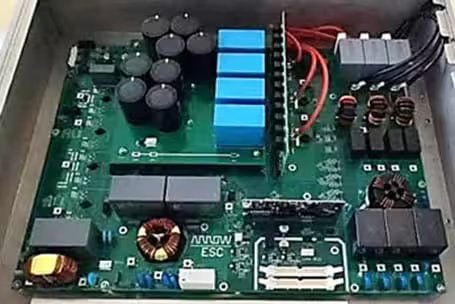
10kW PV Storage Inverter -- This is a hybrid inverter system featuring a fully integrated design with Nexperia’s third-generation SiC (Silicon Carbide) technology. The hardware includes dual interleaved BOOST circuits, a three-phase NPC-T topology, and a CLLLC circuit. It supports bidirectional power conversion and integrates MPPT solar control, three-phase rectification and inversion, bidirectional DCDC control, and charge/discharge management. An external HMI panel can display real-time system status and upload data to the cloud.
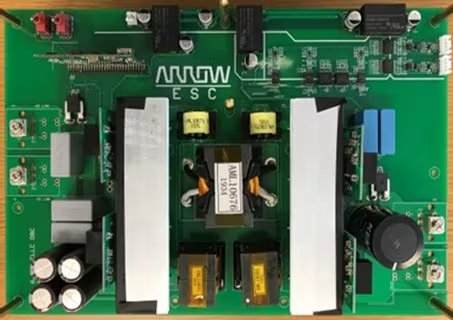
CLLLC full-bridge bidirectional power converter for EVs -- This reference design for EV applications uses Nexperia’s SiC MOSFETs to achieve high efficiency under high switching frequencies while reducing size and weight. Suitable for high-power charging systems such as EV chargers, OBCs, UPSs, and solar systems. The evaluation board helps users accelerate SiC MOSFET system designs and shortens product development cycles. It can seamlessly integrate with Arrow’s “Bidirectional Totem-Pole PFC converter for OBC” reference design.

6KW 48V low voltage storage PCS system -- Developed by Indeed Technology, this PCS system includes interfaces for PV, energy storage, diesel engine, loads, and grid. With the most interfaces in the industry and IP65-rated outdoor units, it is compatible with 48V lithium and lead-acid batteries and supports up to 120A charge/discharge current. It allows up to 16 units in parallel, supports remote online upgrade, parameter configuration, remote commands, and up to 6 scheduled charge/discharge periods daily.
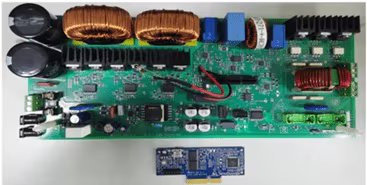
Programmable bidirectional 800W ACDC conversion -- This solution is based on NXP’s programmable digital signal controller, gate driver, and CAN transceiver. It supports 85–265 Vac input and 380 Vdc output in AC-DC mode, and 380 Vdc input with 220V/50Hz or 110V/60Hz output in DC-AC mode. Totem-pole topology enables seamless bidirectional conversion and switching between isolated and grid-connected modes, with OCP, OVP, UVP, OFP, UFP and OTP features.
Programmable Bidirectional 800 W AC/DC Conversion
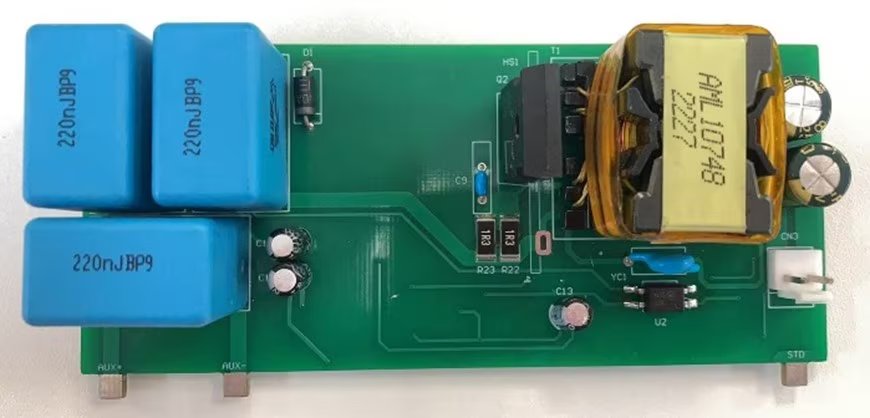
1kV input auxiliary power converter -- A 50W DC-DC converter reference design for auxiliary PV systems. Supports 900–1000Vdc input and outputs 12Vdc 4A max. Using a flyback topology with synchronous rectification, it achieves a simple, isolated, high-performance, low-cost, and reliable design. With onsemi’s SiC MOSFET, it operates efficiently under high bus voltage and high switching frequency, reducing power loss, high efficiency and reduction of size and weight.
Battery Management System (BMS)
A battery management system is like the brain and guardian of the battery, playing a crucial role in solar energy storage. Its primary tasks include monitoring battery voltage, current, and temperature to ensure safe charging and discharging, preventing overcharge/discharge or overheating, balancing each cell module, and extending battery lifespan. It also issues alerts or shuts down systems in case of anomalies. In AI data centers powered by solar energy, BMS ensures batteries operate reliably and efficiently, maximizing green energy use while ensuring uninterrupted 24/7 operation.
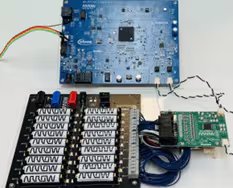
Industrial battery management system (BMS) -- This industrial BMS consists of electronic control circuits that monitor and regulate battery charging and discharging. The solution includes Infineon’s industrial-grade XMC7200, analog front-end TLE9018D, and transceiver TLE9015D. TLE9018DQU handles cell voltage measurement, temperature measurement, cell balancing, and isolated communication; TLE9015D acts as the transceiver, connecting the main battery controller MCU.
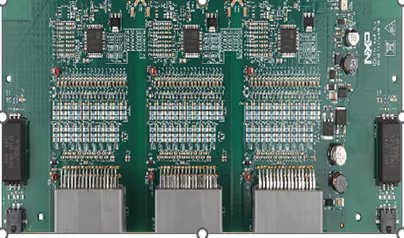
The NXP ESS is a production-grade battery management system reference design. It is an IEC 61508 and IEC 60730 compliant architecture of up to 1500V intended for a variety of high-voltage battery management solutions for utility, commercial, industrial and residential energy storage. NXP ESS is a complete hardware, software and safety package encompassing product safety libraries and documentation considering pre-certification for IEC 61508 SIL 2 and IEC 60730 Class B.
System Interface & Control
In solar and battery storage systems, system interface and control act as the intelligent command center, integrating and coordinating the entire system’s operation. It connects PV panels, batteries, inverters, etc., to work in sync, monitors energy flow and system status, enables smart control and scheduling, and automatically switches between power supply and storage modes based on grid demand. It also communicates with upper-level platforms like EMS or AI data center control system. Robust system interface and control solutions enable stable, efficient, and intelligent support for AI data centers.
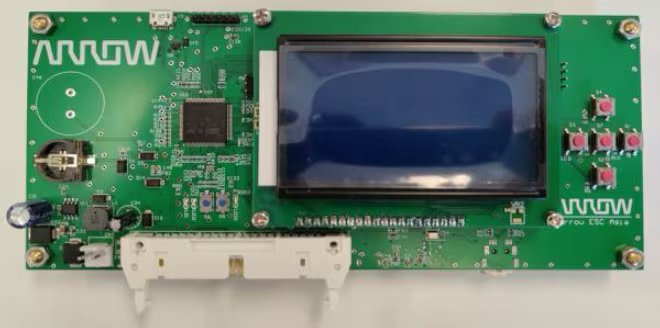
HMI for PV inverter and energy storage system -- This reference design is a generic HMI solution that connects with energy storage systems (like PV system with inverter/MPPT and CLLLC battery charger) through CAN bus. Developed by Arrow dashboard, it supports PV storage protocols, includes 5 buttons, an LCD display, RTC feature, and multiple external interfaces: CAN-FD, Ethernet, Wi-Fi, Bluetooth, and dual RS485 interfaces (for connect to KNX or other external devices).
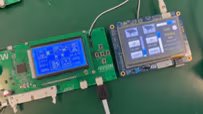
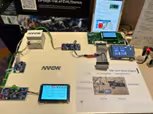
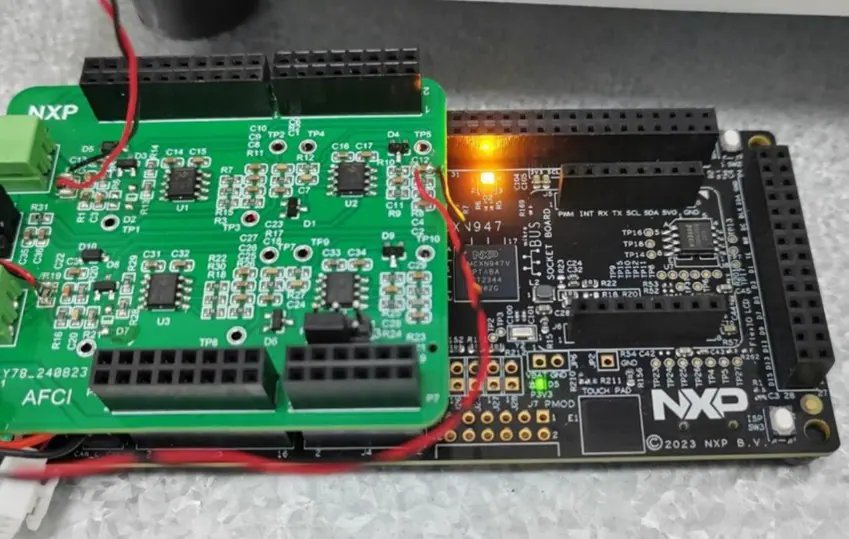
Smart AFCI 2.0 solution -- This solution uses NXP’s MCXN547 MCU, supporting 8-channel sampling and automatic marking. PV systems are prone to arc faults at multiple connection points, and traditional detection often results in false alarms or missed detections in actual applications. This not only brings safety risks but also increases operation and maintenance costs. Based on MCX N series MCUs, this AI-powered industrial arc fault detection greatly improves accuracy and system safety.
Conclusion
As artificial intelligence continues to drive global progress, we must also consider how to ensure that this intelligent power can coexist with our planet. From solar-powered energy to smart battery management and integrated control systems, every step of technological innovation is a step toward sustainability. The AI data centers of the future will not only be the heart of information but also symbols of green transformation. Let us step together into a smarter, cleaner tomorrow - where technology and nature thrive under the sun.
Article Tags